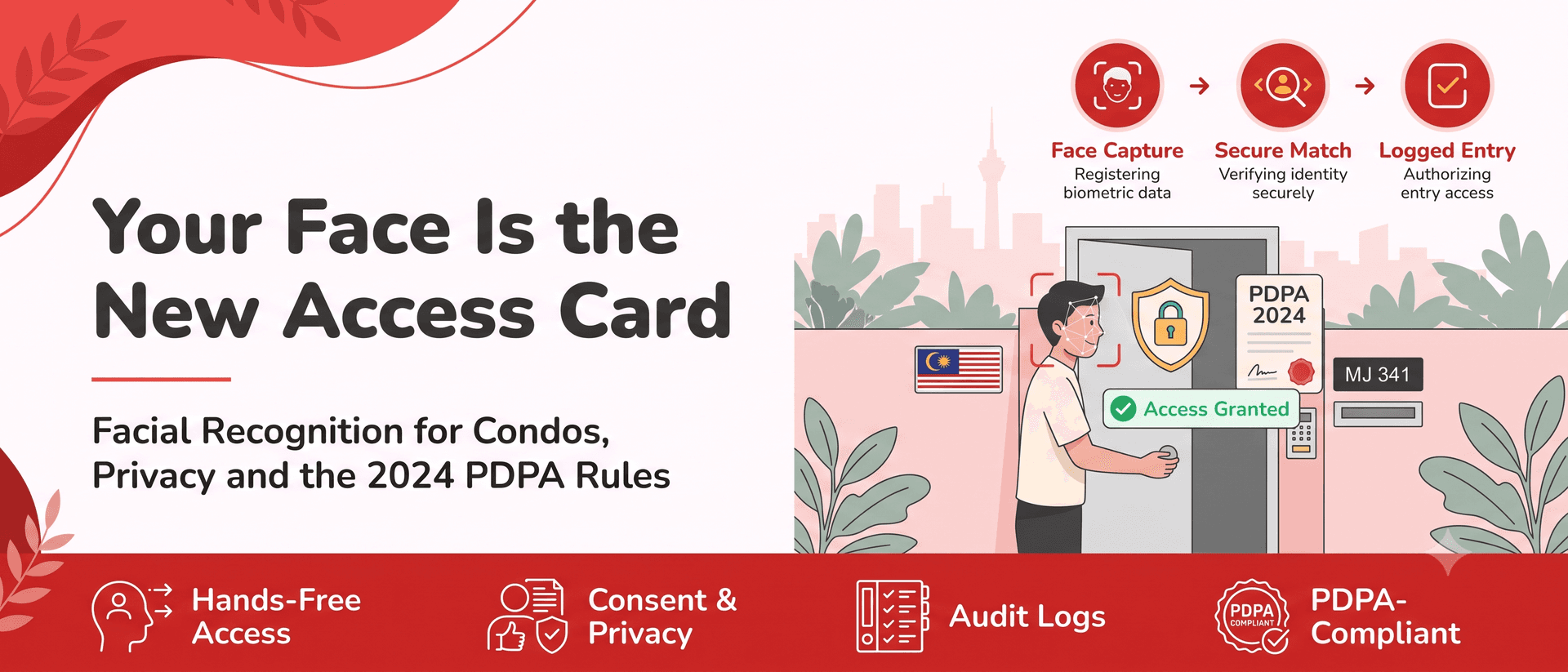
Picture the lift lobby at 7am. Twenty residents, arms full of bags, kids, and coffee — and not one of them fumbling for an access card. The door just knows them. That's facial recognition, and it's quietly becoming the standard for Malaysian high-rises. But the moment you scan a face, you're collecting some of the most sensitive data a person owns. Here's how to get the convenience without the backlash.
Where facial recognition earns its keep
It shines exactly where cards and QR codes slow people down: high-traffic doors. Main lobbies. Lift lobbies. Resident-only floors and facilities. Touchless, hands-free, and impossible to lend to a stranger the way an access card can be.
No more lost cards. A face can't be dropped in a car park or handed to an ex-tenant.
A real audit trail. You know who entered, and when — priceless if an incident ever needs reviewing.
Faster flow. No tapping, no queuing at the turnstile during the morning rush.
The elephant in the lobby: privacy
Here's the part most vendors skip. Since Malaysia's Personal Data Protection (Amendment) Act 2024, biometric data — including facial recognition — is classified as “sensitive personal data.” That means you need explicit consent before you enrol a resident's face, and you must protect that data properly. Penalties for getting it wrong rose sharply — breaches of the core principles now carry fines up to RM1 million.
Translated for a committee: facial recognition is perfectly legal — but it comes with homework. Collect clear consent. Store the data securely. Keep audit logs. And always offer an alternative (card or QR) for residents who opt out. Do that, and you're on solid ground.
Frequently asked questions
Is facial recognition legal in Malaysian condos?
Yes. It is lawful, but facial data is “sensitive personal data” under the 2024 PDPA amendments, so you need explicit consent and proper data protection.
Where is the face data stored, and who can see it?
It should be stored securely with access limited to authorised management, with audit logs. This is a core PDPA compliance requirement — insist your vendor can show you how they do it.
What if a resident refuses to enrol their face?
You must offer an alternative such as an access card or QR code. Consent has to be genuine, not forced.
Roll out PDPA-compliant facial recognition the right way:
Sales: hello@jagaapp.com
Support: support@jagaapp.com
Sources